
Two reports, published a day apart this week, said the same thing about humanoid robot companies from opposite ends of Asia. The stock market has started asking them the question an owner asks about a machine before anything else: who, outside your own circle, is paying for the work?
What happened in China
On 21 September Reuters reported that China’s securities regulators have been holding back a queue of humanoid-robot listings through informal window guidance. One person told the agency the listings were effectively frozen for now; another said there was no formal ban, only a slowdown aimed at one sector. At least six companies are waiting, among them AgiBot, Deep Robotics and X Square Robot.
The trigger was Unitree. Its shares rose more than fivefold on their Shanghai debut a month earlier and have since fallen 55 percent from the peak. The reason the regulators are giving themselves is more interesting than the share chart, though. They want to know whether revenue tied to state-backed projects reflects commercial demand.
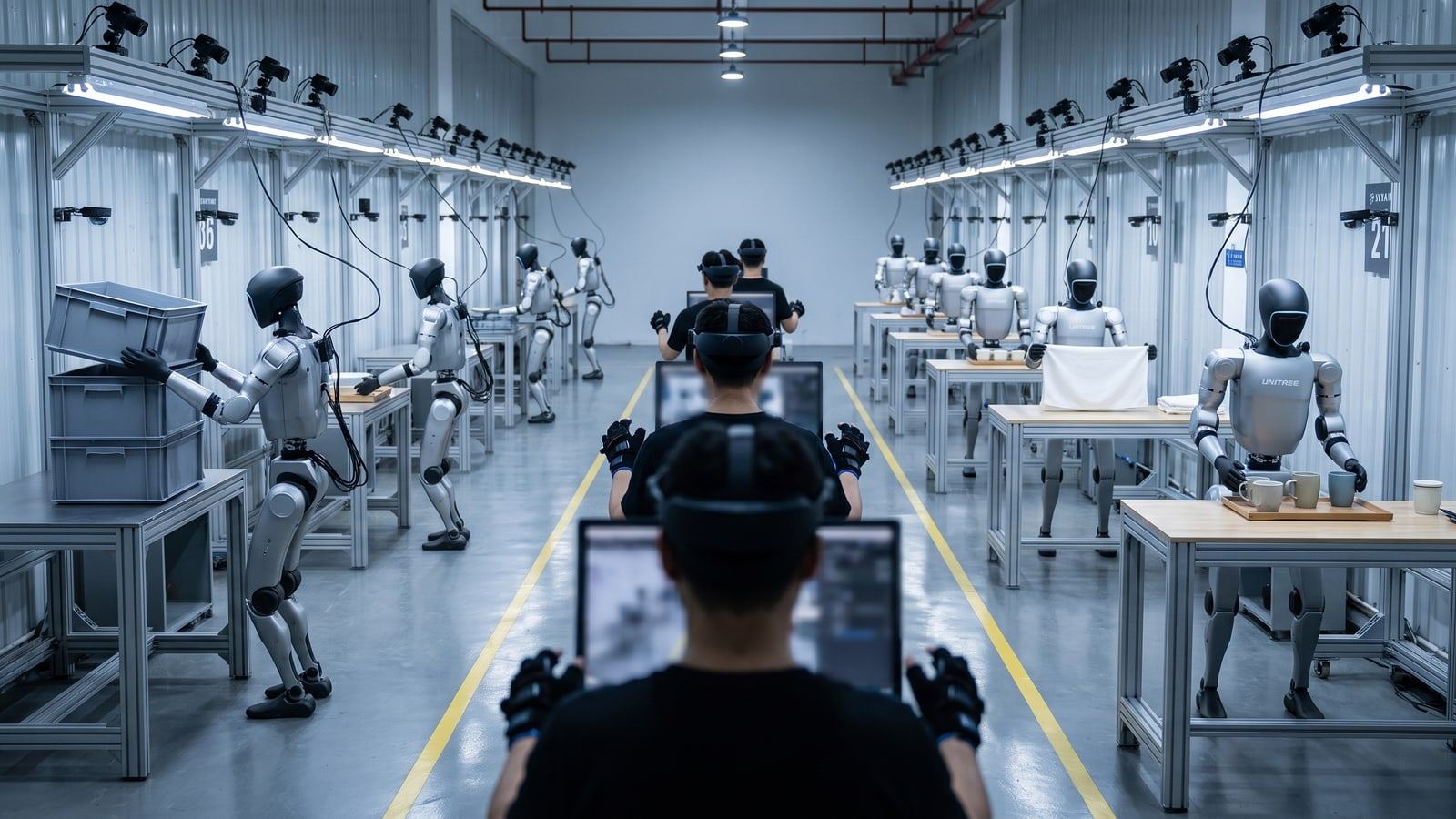
That phrase refers to something specific. Some robot makers have booked significant revenue from robot data-collection centres, where humanoids are trained on real tasks, and from joint ventures in which local governments put up 80 to 90 percent of the initial investment. One investor told Reuters that valuations at some companies could fall 60 to 70 percent if that revenue were stripped out.
Data collection is a real product. We wrote recently that the record a working robot produces now has a market of its own. The difficulty is who is buying. When a centre co-funded by a local government buys robots from a company the same local government is backing, money moves, and nothing has been learned about whether anyone else would pay.
What happened in Korea
A day earlier, a senior Hyundai Motor Group executive told Reuters that a stock-market listing for Boston Dynamics next year won’t be easy. Hyundai is building a plant for 30,000 robots a year by 2028 and plans to start putting Atlas to work at its Georgia factory that year. Until then the robot is not deployed at scale, and the unit is not profitable.
An analyst at Meritz Securities put a date on it: 2029 or 2030, because Hyundai first has to gather large amounts of operational data and improve the robot before selling it broadly to external customers.
Read that condition twice. It is not a technology milestone. It is the test the Chinese regulators are applying, in different words: paid work, documented, for customers who are not family.
The owner’s question, now asked by the listing desk
For anyone who owns machines, that test is old. A robot is worth what an independent customer will pay for its hours, month after month, and the only evidence that counts is the record of those payments. A promise to deploy tens of thousands of units in 2028, a valuation built on an internal fleet, revenue from a customer who is also a shareholder: none of these answers the question, however large the numbers.
The same week, a report that Toyota plans to put 400,000 humanoids into its factories from 2028 went round the trade press. Toyota has not confirmed the figure, and it may yet prove right. It is also a clean example of a number that says a great deal about ambition and nothing yet about who pays.
What the market is now asking for is something humanoid makers can supply. When Agility Robotics announced its listing in July, the figure that mattered was not the valuation but 65,000 operating hours across nine customer facilities, with named third-party customers. And every machine in our catalogue that carries a published rental rate is, by definition, a machine someone outside the maker pays for by the month. That is evidence a listing desk, a regulator and an owner can all read the same way.
What it means for the three ways to own robots
Earlier this month we described three routes into robots: shares in a maker, a fund of makers, or a share of the machines themselves. This week showed how far the first route can drift from what happens on the floor. A maker’s share price can multiply fivefold and then lose more than half of the gain within a month, without a single additional robot being paid for. The hours a machine works for a paying customer do not move like that. They grow slowly, and they are hard to fake.
That is not an argument against owning shares in robot makers, and none of this is investment advice. It is an argument about what to look at, whichever route you choose: independent customers, operating hours, and revenue that would still exist if the maker’s own backers stopped buying.
What is not proven
Both Reuters reports rely on unnamed sources, and China’s regulator did not respond to a request for comment. There is no formal ban, and an informal slowdown can be lifted as quietly as it was imposed. Doubts about how some Chinese robot makers booked revenue say nothing about whether their robots work: several ship in large volumes, and much of the data-collection work is genuine. Hyundai’s schedule may also move faster than its analysts expect.
What changed this week is who is asking. “Who pays for the work” used to be the owner’s question. Now it is the listing desk’s too.