
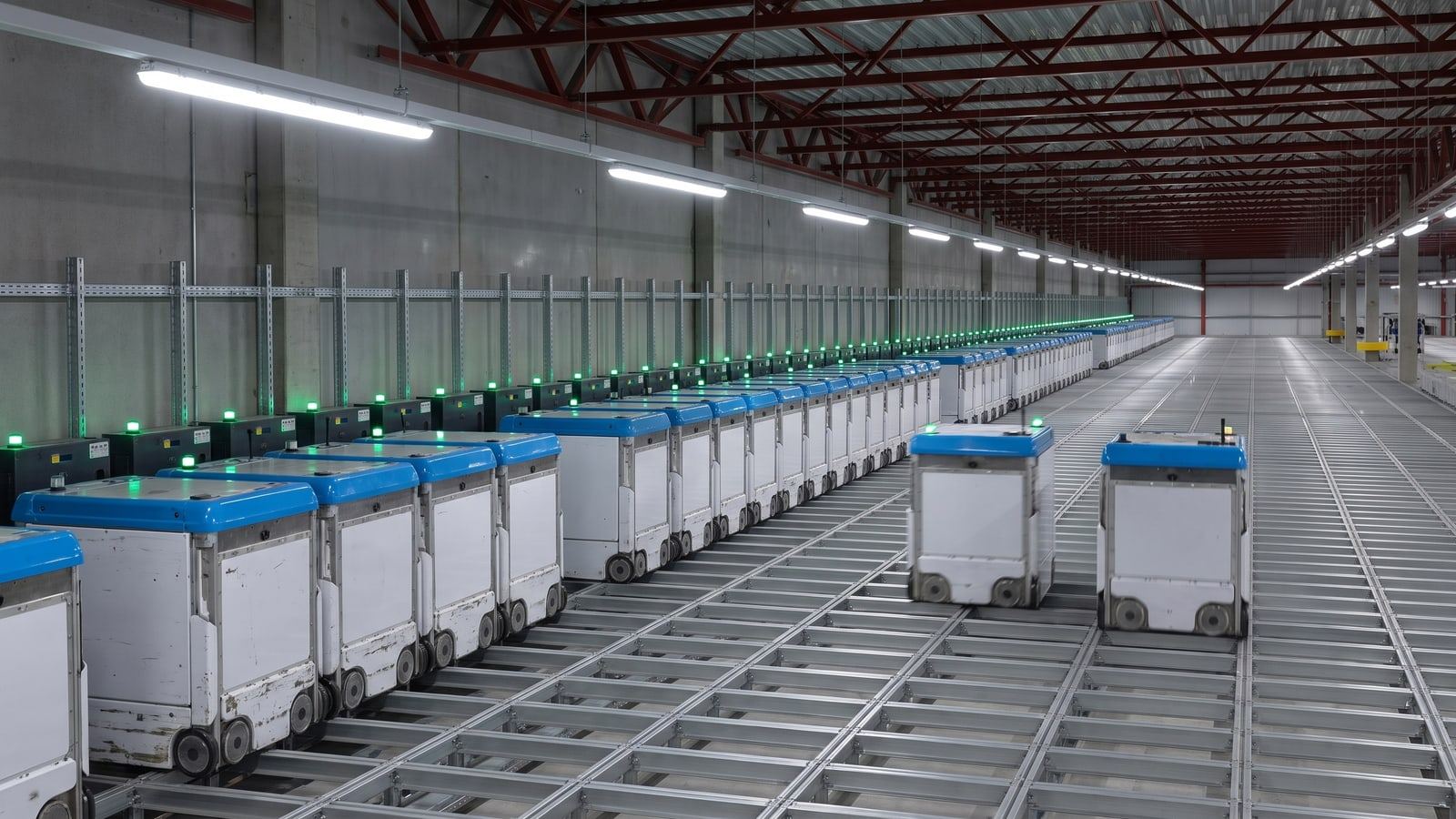
Type “how to invest in robots” into a search engine and the answers come back in one shape: a list of robotics stocks, a list of robotics funds, and a paragraph about the supply chain. Those are real routes, and this year they got busier. Unitree priced its listing on Shanghai’s STAR Market in August at a valuation of about nine billion dollars, Agility Robotics agreed to go public through a merger, and the robotics funds that have existed for a decade are gathering money again.
What the lists leave out is that these routes are exposed to different things. Owning a share of a robot maker, owning a fund of robot makers and owning the robots themselves are three separate positions, and they do not rise and fall together.
Shares: you own the maker’s valuation
Buy stock in a company that builds robots and you own a slice of that company: its margins, its order book, its share of a market that is still being divided up, and the price other investors are willing to pay for all of that on a given day. Whether the machines it sells are working hard in a warehouse this month barely touches the number on your screen. What moves it is the story about the company’s future, which is why robotics shares behave like technology shares.
The listed universe is also thin at the humanoid end. Most makers that matter are private, and the ones that have listed, or announced they would, did so at valuations that price in years of growth. A share in the maker is a bet on who wins the manufacturing race, not on whether robots earn their keep.
Funds: you own the theme
Robotics funds spread that bet. The three largest US robotics ETFs hold dozens of companies each: Global X’s BOTZ tracks an index of robotics and artificial-intelligence companies with more than half its holdings outside the United States, ROBO Global’s fund holds the broadest list of automation companies and charges the highest fee for it, and iShares’ IRBO mixes robotics with semiconductor and software names, so part of what you own is not robotics at all.
A fund is the simplest route and the most diluted one. You own the theme, including the industrial suppliers, the software companies and the chip makers around it, weighted by index rules rather than by where working robots actually earn money. That is diversification, and it is also distance.
Owning the machines: you own the hours
The third route did not exist for private investors until recently. A robot in service is an asset that earns from the hours it is rented out, in the way a hire-fleet excavator or a leased aircraft does. Owning one, or a fraction of a pool of them, means your position is tied to what the machines rent for, how many months of the year they are placed with paying customers, and what they cost to run.
That is a different kind of exposure. It does not care much about the maker’s share price; it cares whether the Unitree G1 or the Agility Digit in the pool is on a customer’s floor or in storage. It brings operational risk with it: downtime, maintenance, insurance, and the fact that hardware generations turn over quickly. And it is less liquid than a share, because the unit you hold is an asset token under Swiss securities law rather than a listed stock. The upside is proximity: income follows utilisation, and utilisation is something an operator can measure and report.
How the three routes differ
| Shares in a maker | A robotics fund | Owning the machines | |
|---|---|---|---|
| What you own | Part of one company | Part of many companies | A share of working robots |
| What moves the value | Growth expectations, results | The index and its weighting | Rental rates, placement, running costs |
| Where the risk sits | One company’s execution | Market and theme | Operations and hardware cycles |
| Liquidity | Exchange hours | Exchange hours | Depends on the venue for the units |
| Rules that apply | Stock exchange | Fund regulation | Securities law, in Switzerland the DLT Act and FinSA |
None of these is the right answer for everyone, and this is not advice about which to choose. The point is narrower: they are not substitutes. A portfolio that holds a robotics fund does not own any robot hours, and a share of a pool does not own any of Unitree’s growth.
What to check before choosing the third route
Owning machines is the route with the least track record for private investors, so it deserves the most questions. What exactly does the unit represent, and under which law. How is utilisation measured and reported, and by whom. Who pays for maintenance, insurance and replacement when a generation is retired. How, and where, can the unit be sold. And what happens to income when a machine is between customers.
The guide to fractionally owning robots walks through those questions, and the catalogue shows which machines have public prices and rates today. The routes that already existed are still there. What changed this year is that the third one has an address.