
Few companies have tried more humanoid robots than GXO. The contract logistics group, which runs more than 1,000 facilities for other companies, has carried out more than 45 humanoid pilots, according to Forbes. On 12 November it said what it wants next: up to 1,000 humanoids from Apptronik over four years. It also said how it wants to pay for them, and that is the more interesting part.
What GXO signed
The two companies signed a letter of intent to expand trials of Apptronik’s Apollo humanoid in GXO’s live operations from 2027: picking, moving cases and totes, packing and sorting. Each task will be measured against productivity, safety and operational targets that both sides agree. If Apollo meets them, the companies intend to move towards a global rollout of up to 1,000 robots over the next four years, starting in North America in late 2027. The commercial model is expected to be robotics as a service, in which GXO pays for the robots’ work rather than buying the machines.
The relationship is not new. The two started a proof of concept in 2024, finished a pilot this year on autonomous picking of small consumer goods, and have tested Apollo on more than 50 logistics tasks at Apptronik’s training facility. Jeff Cardenas, Apptronik’s chief executive, described the work as “measured against real operational KPIs in live facilities”.
Three makers, one customer
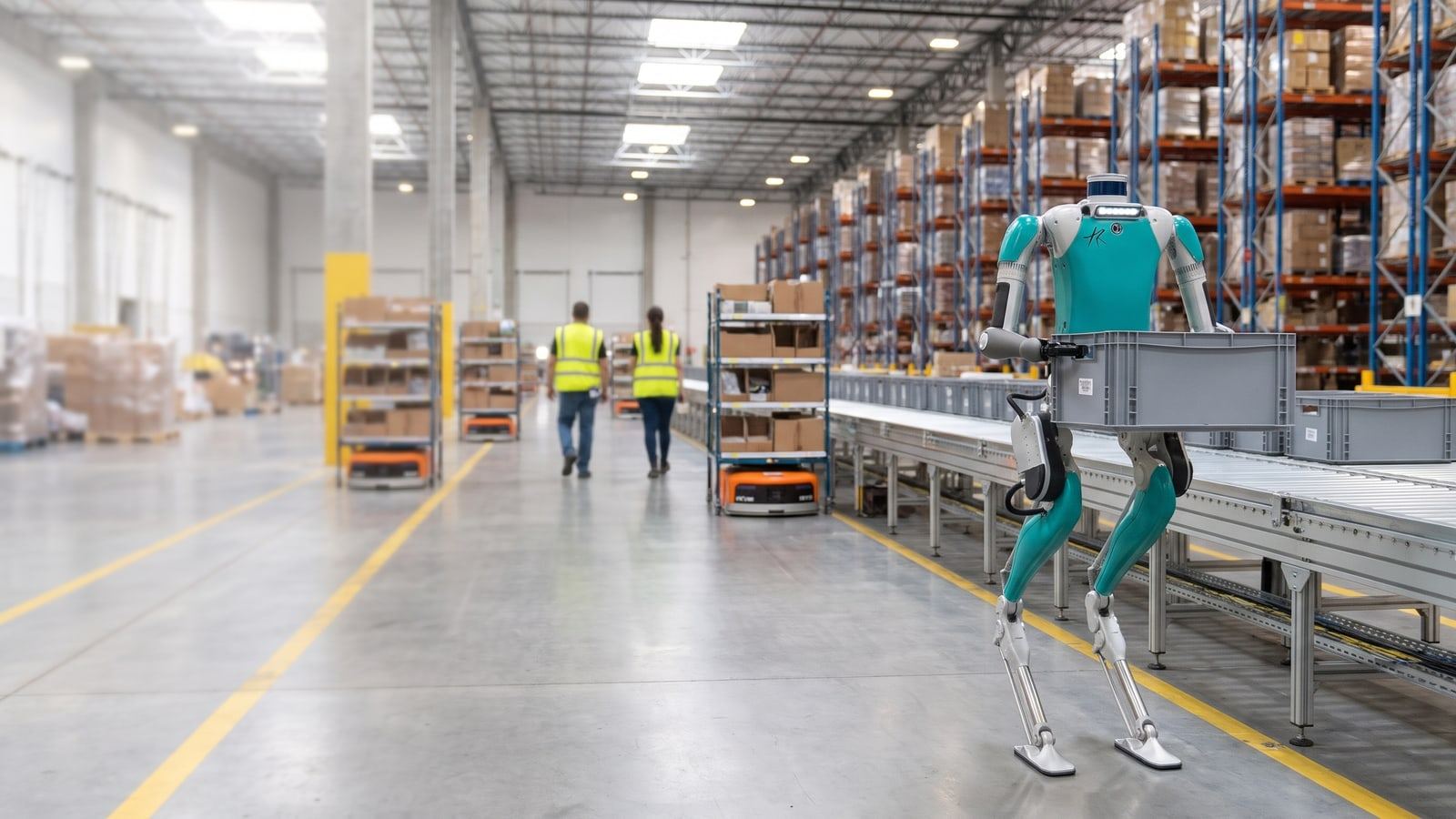
Apptronik is one of three humanoid makers GXO works with. Agility Robotics, whose Digit was the first humanoid GXO put to work under a commercial agreement, announced on 26 October that it is moving into two more GXO warehouses from early 2027. Reflex Robotics signed a rental deal with GXO as well, Forbes reports. Alongside them, GXO is putting roughly 20,000 conventional robots to work across its network this year.
That is how a careful buyer behaves when it does not yet know which maker will win. It keeps several in play and lets each one earn its place task by task. “There’s value to a mixed fleet, of course, but there’s also value to scale,” wrote John Koetsier in Forbes, and which makers GXO scales first will say a lot about who is ahead.
Why the most experienced buyer rents
GXO’s chief executive, Patrick Kelleher, was candid on an earnings call in August. The company has “not achieved ROI on humanoids yet”, and Kelleher expects it to be “a couple of years away” from doing so. A customer in that position has every reason not to own the machines. Renting lets GXO grow its humanoid workforce only as fast as each task proves itself, and pay for robots much as it pays for labour.
Renting also moves another risk off GXO’s books: the machine going out of date. The two new Digit sites will start with the current model and switch to Digit 5 once it is commercially available. Under a rental, the replaced robots are somebody else’s problem.
That somebody is the owner. A rented robot still has to be bought by someone, and in robots as a service that is usually the maker, which then has to fund a fleet on its own balance sheet. Apptronik raised 935 million dollars this year, according to Forbes. We wrote in September that IBM rented out its computers until 1956, and that more than a hundred firms later made a business of nothing but owning and leasing IBM machines.
What it means for owning robots
The customer with the most humanoid experience in logistics has now told the industry two things. It wants to pay for work, not machines, and it does not want to depend on a single maker. Each robot will have to earn its place against targets the customer sets, as the napkin-folding robots at Din Tai Fung had to. And a ceiling of up to 1,000 robots, like the Navy’s 300 million dollar inspection contract, is a promise of more orders if the first ones work, not an order in itself.
For a pool that owns machines from several makers and rents them out, like the beep Robo-Pool, this is the shape of demand worth watching: customers who rent rather than buy, and who keep more than one maker in play.
What is not proven
A letter of intent is not an order, and 1,000 robots is a ceiling that depends on targets nobody has published. The expanded trials only start in 2027. GXO’s own chief executive says humanoids have not yet paid for themselves in its warehouses. Neither company has disclosed rental prices, contract lengths or Apollo’s reliability figures. And who will own the robots in a rental fleet of this size, whether the maker, a financier or investors, is something neither side has said.
The most experienced humanoid buyer has decided to pay for work rather than machines. Somebody still has to own the machines.