
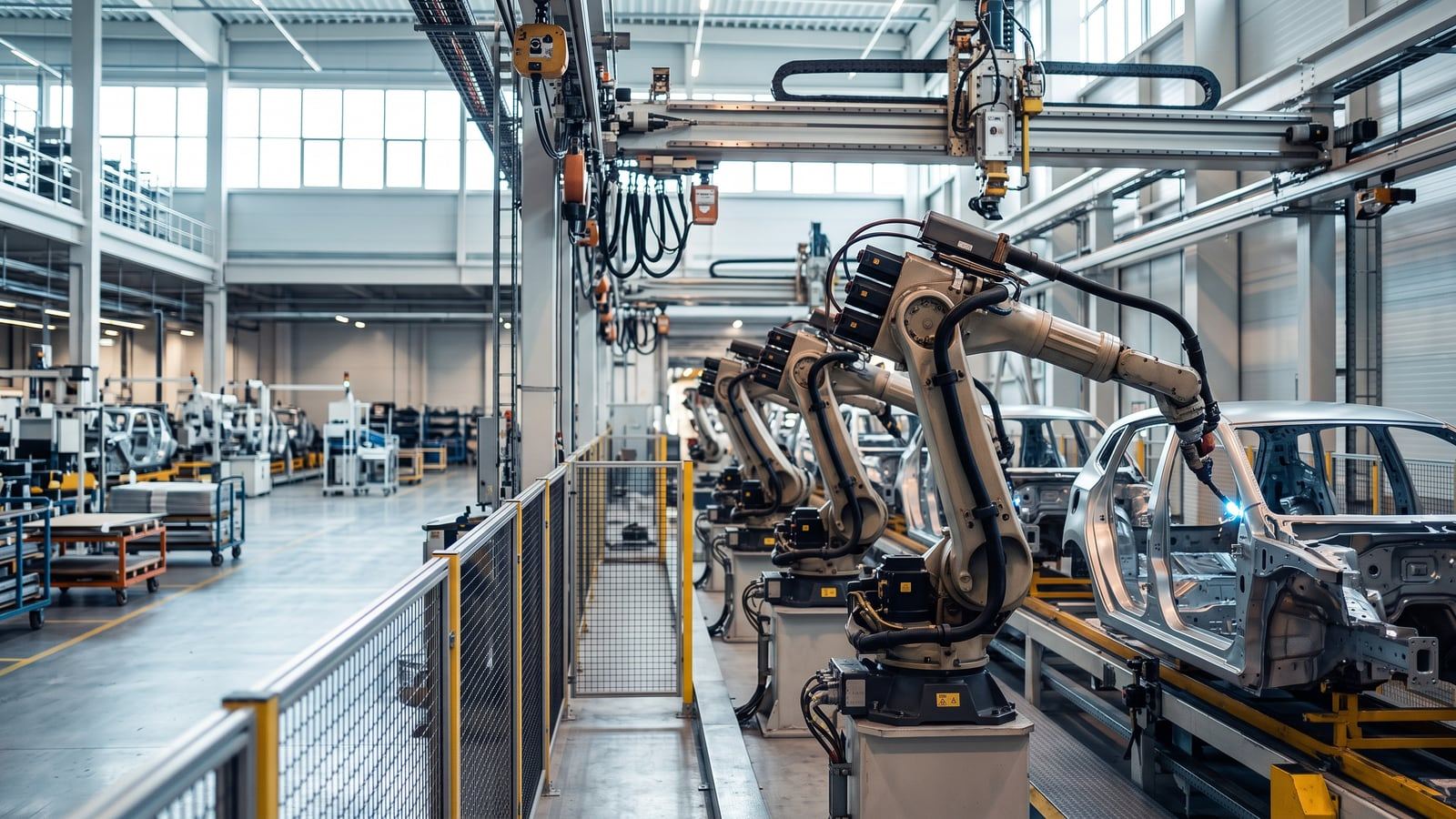
Yesterday a robotics company raised more than 900 million dollars at a valuation above 6.3 billion, the largest single private round in China’s embodied AI sector. The company is XPeng’s robotics unit, IDG Capital led, and Tencent and Alibaba came in alongside.
The number is not the interesting part. The interesting part is that XPeng makes cars.
The same companies keep appearing
Set the recent announcements next to each other and a pattern shows up that nobody has named yet.
Tesla builds Optimus and runs it inside its own plants. XPeng is building a humanoid called Iron and says openly that it will lean on its electric-vehicle development and manufacturing operations, drawing on experience producing hardware at large volumes and using its EV manufacturing infrastructure for production and delivery. On the other side of the same industry, BMW has run Figure robots on the line at Spartanburg since 2024, and Mercedes-Benz has Apptronik’s Apollo working intralogistics in Berlin and Hungary.
So the car industry is now the biggest customer for humanoid robots and, increasingly, their biggest manufacturer. Those are usually different companies. Here they are the same ones.
Why cars and robots turn out to be the same problem
This looks like diversification until you look at the parts list.
A humanoid robot is a set of electric actuators, a battery, a power management system, a sensor stack, and a control computer, assembled to tolerance and expected to survive years of vibration and heat. An electric car is the same list in a different arrangement. The supply relationships, the testing regimes, the safety certification habits and the people who know how to hold tolerances at volume already exist inside a carmaker.
That last item is the one that matters most, and it is the one robotics startups consistently underestimate. Building one robot that works is an engineering problem. Building ten thousand that all work the same way, arrive on schedule and can be serviced in the field is a manufacturing problem, and it is a harder one. Car companies have spent a century solving it.
Which is also why the component suppliers moved first. Schaeffler, which spent decades making bearings for combustion engines, signed three humanoid actuator partnerships inside five months. The supply chain saw where this was going before most of the commentary did.
What this changes for anyone who wants to own the machines
More manufacturers with real production capacity means the supply of working robots stops being the constraint it has been.
For most of this decade the limit on deploying robots was not demand and not capability. It was that hardly anyone could build them in quantity, which kept prices high, delivery times long and buyers dependent on whichever startup they had signed with. Automotive capacity entering the field changes all three at once.
For a fleet, that is straightforwardly good. Being able to buy from several serious manufacturers rather than one is what makes a pool a pool: it means a machine can be chosen for the job and the contract rather than for whoever has stock, and it means no single maker’s delivery schedule sets the pace. This is why the beep Robo-Pool is built across manufacturers and industries instead of committing to one platform. The question of which company wins the humanoid race matters much less to a diversified fleet than the question of whether the category as a whole keeps expanding.
The part that is still unproven
Manufacturing capacity is not demand. A car plant can produce robots at volume long before anyone has established what those robots will be paid to do, and the history of manufacturing is full of capacity built for markets that arrived later or smaller than planned.
XPeng expects Iron to reach mass production by the end of this year, starting in its own stores and campuses before any broader commercial launch. That sequence is worth reading carefully: like Tesla, the first customer is the company itself. Deploying into your own buildings proves the machine works. It does not yet prove somebody else will pay for it.
Robotics companies have raised over 23 billion dollars during 2026, close to the total for all of 2025. That is capital taking a position on the answer, not the answer itself. What has changed this month is who is placing the bet: not only robotics startups, but the companies that already know how to build complicated machines by the million.