
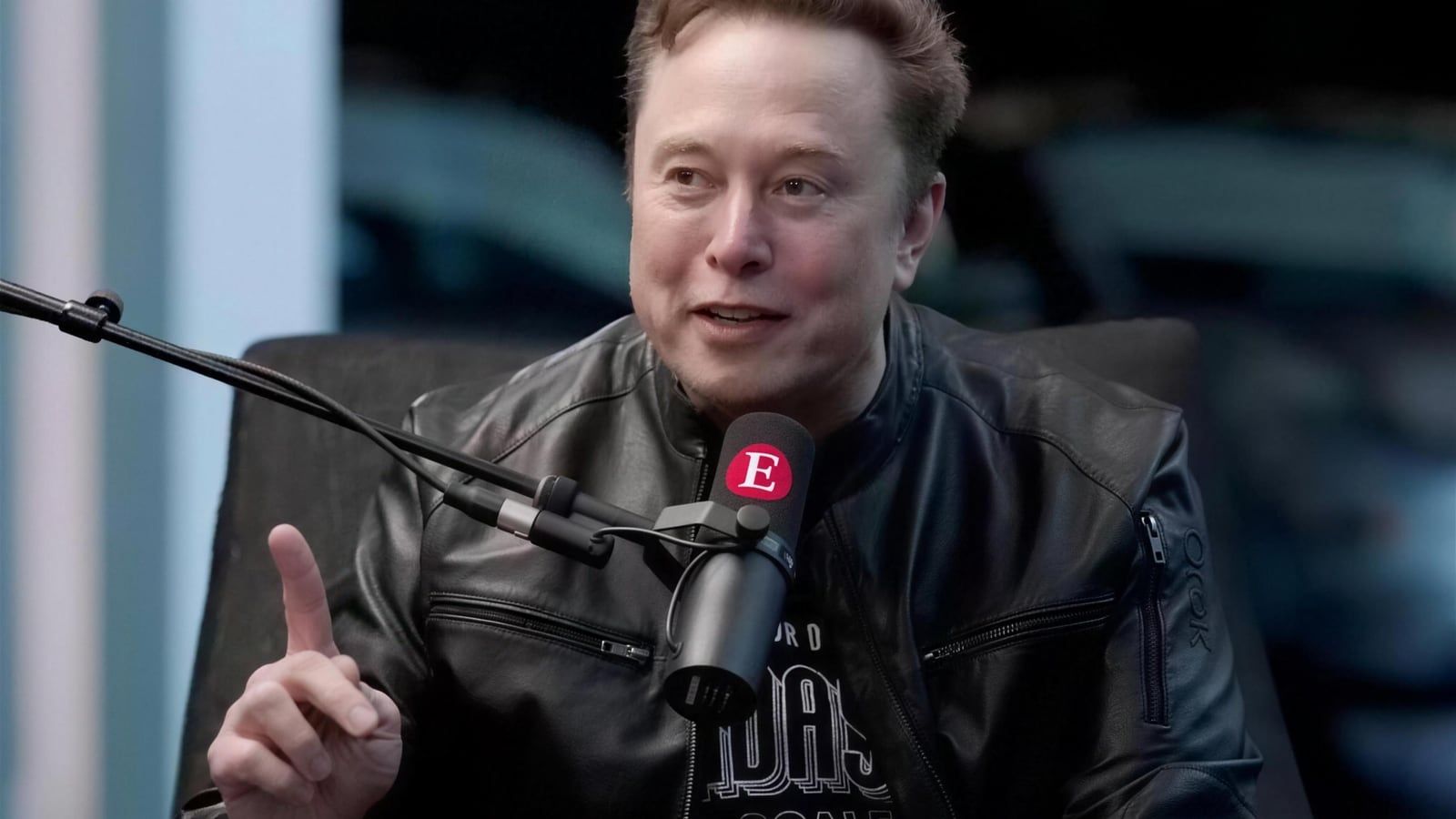
Elon Musk recently painted a scenario that made global headlines. Within the next ten to twenty years, Musk claims, human paid work will become “almost entirely optional”. By 2036, money in its traditional sense could become obsolete. As a solution to the emerging income gap, Musk calls for an unconditional basic income from the state — a “Universal High Income” for every citizen.
Musk is partly right. And he is partly dangerously wrong. The difference decides whether the coming economy becomes an “age of abundance” — or a new form of inequality.
What is already happening today
Musk’s future is closer than many think. At BMW’s Spartanburg plant, humanoid robots from Figure AI have been working on the live production line since October 2024 — in eleven months, they contributed to the assembly of over 30,000 vehicles, running ten-hour shifts, five days a week. In Germany, BMW is deploying the humanoid AEON robot from the Zurich-based firm Hexagon Robotics at its Leipzig plant from mid-2026 for battery assembly. Mercedes-Benz has Apptronik’s Apollo robot moving components between production lines in Berlin-Marienfelde and Kecskemét, Hungary. Tesla operates over 1,000 Optimus Gen 3 units at its Fremont plant in battery assembly and cable routing. Hyundai has Boston Dynamics robots working in its stamping and body shop operations.
And the price? At BMW, the hourly rate for a humanoid robot is now around 25 US dollars per operating hour — costs that already compete with human wages for major corporations.
This is not future music. This is present-day practice. And it is accelerating.
Where Musk is dangerously wrong
Musk’s answer to all of this is basic income. Sounds social. It is not.
It has two fundamental problems. First, it is too slow. By the time states agree on the level and financing of a basic income that would already be needed within ten years according to Musk’s timeline, millions of people will have lost their jobs long ago. Second, it does not change the power dynamics. If corporations own the robots and states pay out the basic income, the underlying structure remains: few own the means of production, many receive handouts. The handout just gets larger. And whoever receives handouts has no bargaining power.
Musk’s future is a future of dependency. It is better than a future of unemployment. But it is not the only possible answer. It is not even the best.
The third answer
There is another possibility. It is so simple that it is almost overlooked.
What if people owned the robots?
Not the state. Not the corporations. But people themselves — as direct co-owners of a growing robot fleet that works for them.
In this scenario, the basic-income debate becomes irrelevant. Whoever holds a share in robots is not receiving a handout — they earn from their own capital. Wealth is not redistributed — it is distributed differently from the start. And the power dynamics shift, because millions of people actually own something that is productive.
If Musk’s prognosis is even half right, the time to start is not 2036. It is now. And the question is not who saves us. It is whether we position ourselves in time.
That is exactly what we are working on.
Beep Labs AG is developing a platform that lets people continuously build up shares in a real robot fleet. More information at beep.org.