Anyone building a portfolio thinks in categories. Shares for growth. Bonds for stability. Real estate for inflation protection and value preservation. Perhaps a little gold against crises. Over the past ten years, a new category has been added that not every generation has yet clarified: crypto assets. And over the past three years, a new serious subcategory has emerged from this category: asset tokens.
Where do asset tokens belong? What can they deliver in a private person’s portfolio that classical investments cannot? Which allocation is sensible? Which risks must be observed? This article tries to answer these questions soberly — without sales intent, without grand promises.
Let us begin with sober stocktaking. An asset token under Swiss FinSA is legally a security — comparable to a share, a bond or a participation certificate. It represents an economic claim against an issuer or a share in an asset. What distinguishes it from classical securities is the technical form: it is represented as an entry on a blockchain, not as a paper certificate or entry in a classical register.
This technical form has three consequences relevant to a portfolio.
What asset tokens do not deliver: they are no magic instrument that eliminates risks. They can be volatile, depending on construction. They can be illiquid if no established secondary market exists. They depend on the value of the underlying asset — if it performs poorly, so does the token.
How asset tokens relate to other asset classes
Compared with shares, asset tokens are often more tightly bound to real assets. A share represents a slice of a company — with all the strengths and weaknesses of that company. A well-constructed asset token usually represents a more direct claim — to a specific asset, cash flow or pool. This makes value development often more transparent, but also less diversified per token.
Compared with bonds, asset tokens usually offer more growth potential, but also more volatility. Bonds deliver fixed coupons and a clear repayment plan. Asset tokens fluctuate in value depending on the performance of underlying assets.
Compared with real estate, asset tokens have the advantage of better liquidity and lower entry thresholds. Buying real estate requires six- or seven-figure amounts. A tokenised real estate pool or another real asset opens this category for much smaller amounts.
Compared with speculative cryptocurrencies, asset tokens are based on fundamentals. The value of a cryptocurrency like Bitcoin or Dogecoin comes from market supply and demand. The value of an asset token comes from the value of the assets it represents. This makes valuation more traceable and generally less volatile.
Three roles asset tokens can play in a portfolio
First role — diversification into new categories. Some assets were previously inaccessible to private investors: direct participations in industrial robotics, solar energy installations, wine collections, art portfolios. Asset tokens open these categories.
Second role — inflation protection and value preservation. Asset tokens backed by real assets offer, like classical tangibles, a degree of protection against monetary erosion. When inflation rises, the rents on tokenised real estate, the earnings of the tokenised robot fleet, the prices of tokenised commodities tend to rise too.
Third role — positioning in structural growth markets. Some asset tokens represent assets in particularly dynamic markets. Robotics is one. Anyone positioned early in a growing asset category participates in its development — provided the underlying assets perform accordingly.
What allocation is sensible?
The question of concrete portfolio allocation cannot be answered generally. It depends on age, life situation, risk tolerance, investment horizon and many other factors. What can be said is a rough placement in the context of established portfolio theory.
Most classical portfolio models recommend for alternative investments — which today include asset tokens — an allocation between 5 and 20 percent of total wealth. Within this alternative allocation, further diversification is sensible: not just one asset token, but a mix across different underlying assets and constructions.
More important than the precise percentage is another principle: asset tokens belong in the part of the portfolio you can hold long-term. They are not an investment for money you might need in twelve months. Value development follows underlying economic substance — and that takes time to show.
Three questions before any investment
Before investing in an asset token, three questions are worth asking.
Question one — what stands behind the token? An asset token is only as valuable as the asset it represents. Which real assets stand behind it? How are they valued? How verifiable is the valuation? Anyone presenting the token should be able to answer these questions cleanly.
Question two — what legal structure? Where is the issuing company registered? Which legal framework applies? Which supervisor is competent? A Swiss company under FinSA offers different protection mechanisms than a Cayman Islands company.
Question three — what liquidity? How can the token be sold if you want to exit? Is there an organised secondary market? Is there a buyback mechanism? How many days or weeks would exit take?
Where beep fits into this logic
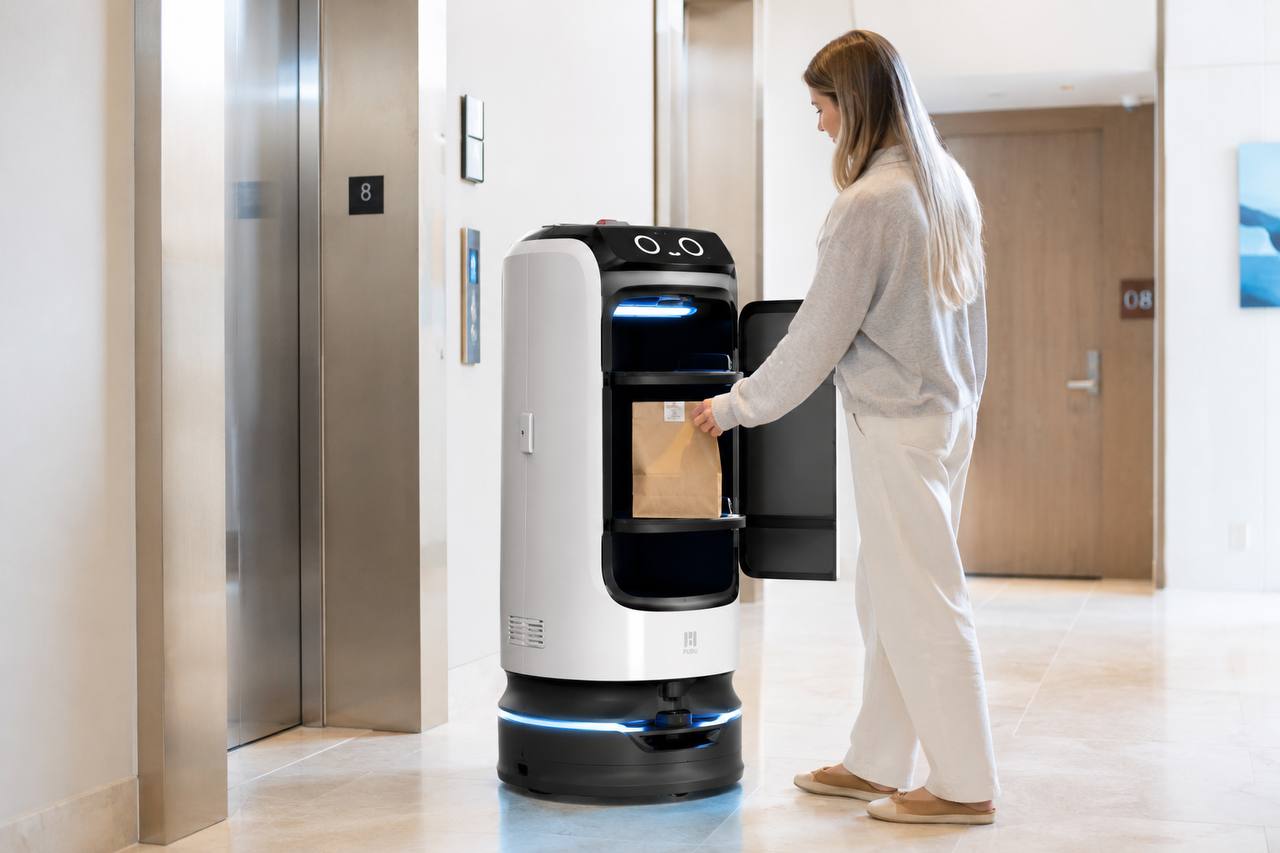
At beep, we build an asset token backed by a real robot fleet. Anyone wanting to use beep in a portfolio should evaluate it by the same criteria as any other asset token.
What stands behind it? A pool of industrial, service and humanoid robots, operated by Beep Labs AG, aiming at broad diversification across robot types and industries. The economic foundation is rental income and operating revenues of the robots, supplemented by further pillars (AI solutions, data marketplace, time platform) added step by step.
What legal structure? Swiss joint-stock company based in Zug. Asset token under FinSA, structured on the basis of the Swiss DLT Act. Legally accompanied by one of the leading Swiss firms in blockchain law.
What liquidity? Currently designed for long-term holding. Liquidity arises primarily through the structural buyback mechanism. Long-term, tradability via regulated crypto exchanges or DLT trading venues is intended — without a concrete time commitment.
For which investor might this fit? For people with a long-term investment horizon, who believe in the robotics economy, and who want to diversify a small to medium part of their alternative portfolio — through a Swiss structure, in a field previously closed to private investors.
For whom it does not fit: people needing short-term liquidity. People seeking guaranteed returns. People unwilling or unable to bear the risk of a new asset category.
Asset tokens are no miracle weapon. They are a tool — one among many — for long-term portfolio building. They open doors to categories previously reserved for institutional investors. They also carry their own risks: complexity, volatility of underlying markets, sometimes limited liquidity.
Anyone using them in a portfolio should do so with deliberation. With clear allocation, clear horizon, clear understanding of what stands behind each token. Asset tokens are not speculation when used correctly. They are a building block in a portfolio strategy that today has more options than any previous generation.
Which of these options are right for an individual’s life situation only that individual — best with an independent advisor — can decide. This article can only do one thing: explain which options exist at all.